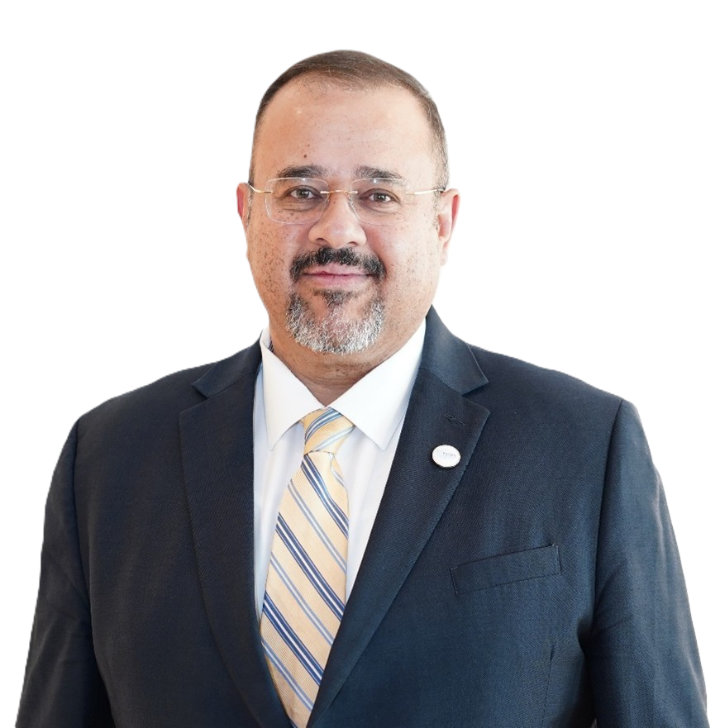
Prof. Hesham El-Askary
Director Earth Systems Science and Data Solutions Lab at Chapman University
Prof. Hesham M. El-Askary is a Professor of Earth Systems Science and Remote Sensing at Chapman University and Director of the Earth Systems Science and Data Solutions Lab. He is also the former Vice President for Special Projects and Space Missions at the Egyptian Space Agency. Currently, he serves as an Advisor to the Director General of ICESCO, a consultant and science lead for the UN International Organization for Migration, and a consultant/advisor with UNESCO on open science and capacity-building initiatives.
Prof. El-Askary is an internationally recognized Earth systems scientist with more than two decades of experience in remote sensing, Earth Observation, GIS, climate change impacts, environmental modeling, natural hazards, and data-driven solutions for sustainable development. He currently contributes to the Intergovernmental Panel on Climate Change Seventh Assessment Report cycle, with a focus on climate change impacts, adaptation, vulnerability, risk, exposure, and Mediterranean-region climate challenges. This builds on his earlier IPCC contribution to the Desertification chapter of the IPCC Special Report on Climate Change and Land.
His research focuses on the use of satellite Earth observations, geospatial analytics, artificial intelligence, and environmental modeling to understand complex interactions among the atmosphere, land, water, coastal, marine, and human systems. His work has addressed sea-level rise, land degradation, desertification, drought, flash floods, air quality, dust storms, coral reefs, mangroves, renewable energy, water resources, biodiversity, and climate resilience across Egypt, the MENA region, and other vulnerable regions.
Prof. El-Askary has led and contributed to major projects funded by NASA, NSF, USDA, the European Union, Horizon 2020, and regional institutions.